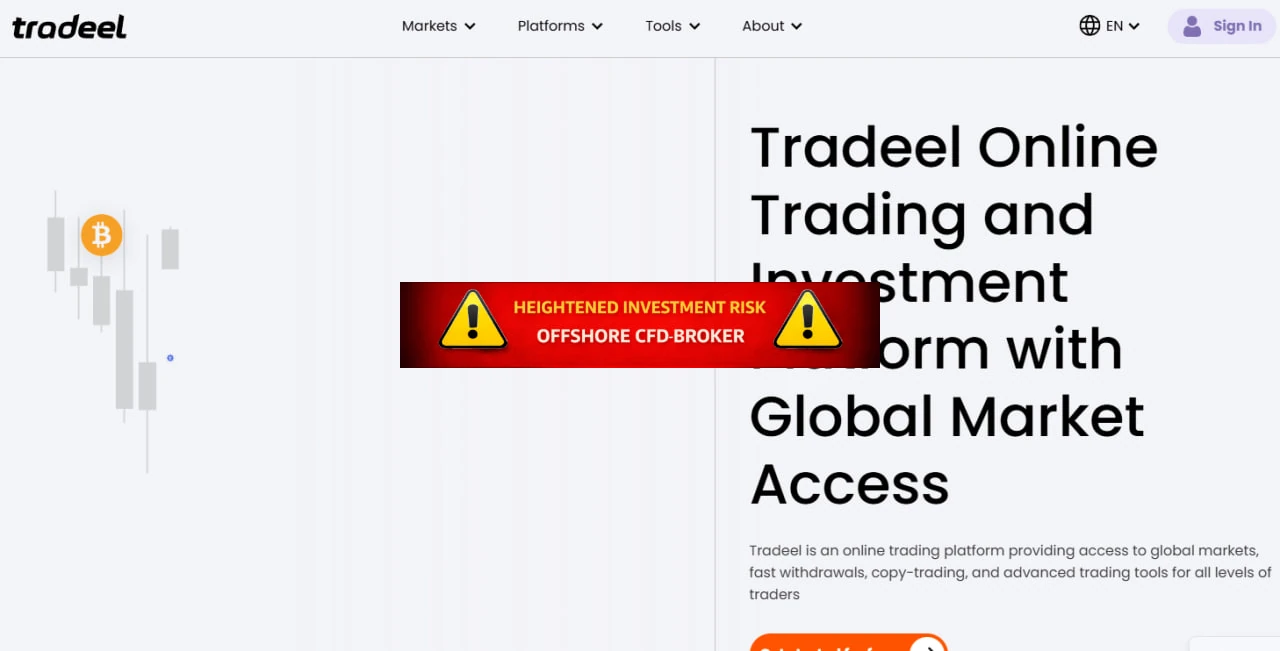
A broker launched in 2025 that began accepting deposits immediately, relying on offshore licensing instead of real regulatory oversight.
Summary
Tradeel.com presents itself as an international brokerage platform offering leveraged trading across forex, stocks, cryptocurrencies, and other markets. Despite being launched in 2025, the platform already accepts client deposits, promotes margin trading, and displays an offshore license.
Tradeel launched in 2025 and began accepting client deposits almost immediately. In regulated financial markets, such speed combined with offshore licensing and the absence of major regulators is a known risk pattern rather than a sign of maturity. A review of public data shows that Tradeel operates without authorization from any major financial authority, placing the project in a high-risk category for retail investors.
General information about Tradeel.com
| Parameter | Details |
|---|---|
| Project name | Tradeel |
| Official website | https://tradeel.com |
| Legal entity | Tradeel LTD |
| Jurisdiction | Mwali (Mohéli Island, Comoros) |
| Claimed regulator | Mwali International Services Authority (MISA) |
| License number | BFX2025129 |
| Registered address | Bonovo Road, Fomboni, Mohéli, Comoros |
| Contact email | [email protected] |
| Phone number | +44 7458 164481 |
| Trading instruments | Forex, stocks, cryptocurrencies, indices, ETFs, commodities |
The presence of formal disclosures alone does not determine reliability. The key issue is the level of regulatory protection behind them.
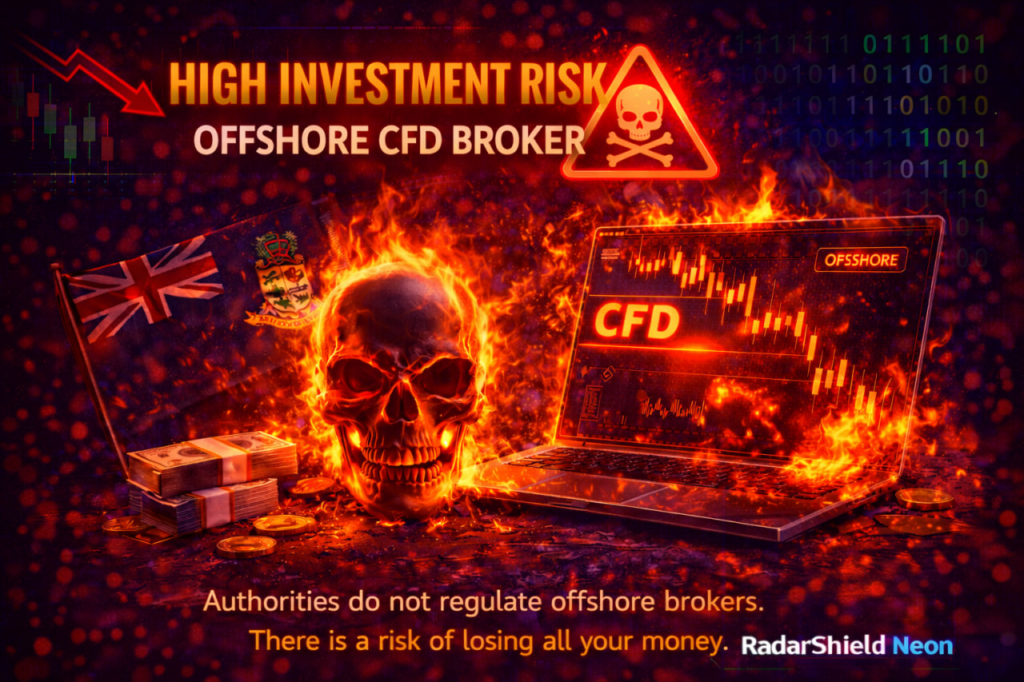
Domain registration in 2025 – why this matters for a broker
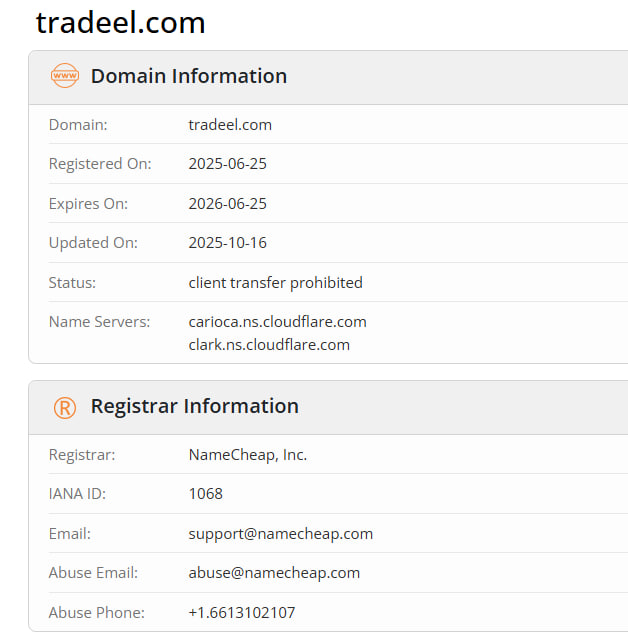
According to WHOIS data:
- the domain tradeel.com was registered on June 25, 2025
- the registration term is one year
- registrar – NameCheap
- domain ownership details are hidden
- Cloudflare infrastructure is used
Launching a brokerage platform and accepting retail deposits within months of domain registration is extremely uncommon for regulated firms. In practice, this usually indicates the absence of a full compliance and supervisory framework.
Tradeel has no operational history. This does not prove fraud on its own, but it significantly increases risk, especially when combined with offshore regulation.
MISA license – what it gives the broker and what it does not give
clients
Tradeel LTD claims regulation by the Mwali International Services Authority (MISA).
Key facts about this license:
- Mwali is an offshore jurisdiction
- licensing is issued through a simplified process
- there is no ongoing supervisory control
- no investor compensation schemes exist
- client disputes are not actively reviewed
The license formally exists, but it does not provide effective protection for client funds.
An offshore MISA license does not grant the right to offer financial services to UK or EU residents. Without FCA or EU authorization, clients have no access to investor compensation schemes or regulatory dispute resolution mechanisms.
Regulatory checks with major financial authorities
To assess the real level of oversight, Tradeel was checked against official financial regulators.
- Central Bank of Russia
https://www.cbr.ru/registries/
Tradeel LTD is not listed. - Financial Conduct Authority (UK)
https://register.fca.org.uk/
Tradeel is not authorized or registered. - Cyprus Securities and Exchange Commission (EU)
https://www.cysec.gov.cy/en-GB/entities/investment-firms/cypriot/
No license is found. - Australian Securities and Investments Commission
https://connectonline.asic.gov.au/
Tradeel LTD does not appear in the register.
The review of official regulatory registers does not confirm the existence of any license for Tradeel with major financial authorities.
From a regulatory standpoint, Tradeel qualifies as an unregulated offshore broker, as it provides leveraged trading services without authorization from any major financial authority.
Read also: https://watchdog-online.com/reviews/raymonbai-raymonbai-org-clone-network/
Bonovo Road address – a recognizable offshore pattern
The address listed by Tradeel:
Bonovo Road, Fomboni, Mohéli, Comoros
This address is widely used by offshore entities and typically represents a postal registration rather than a physical operational office.
Bonovo Road frequently appears in offshore registrations of short-lived brokerage projects, making it a recognizable pattern rather than evidence of real operational presence.
For a broker handling client funds, this raises serious concerns about accountability and infrastructure.
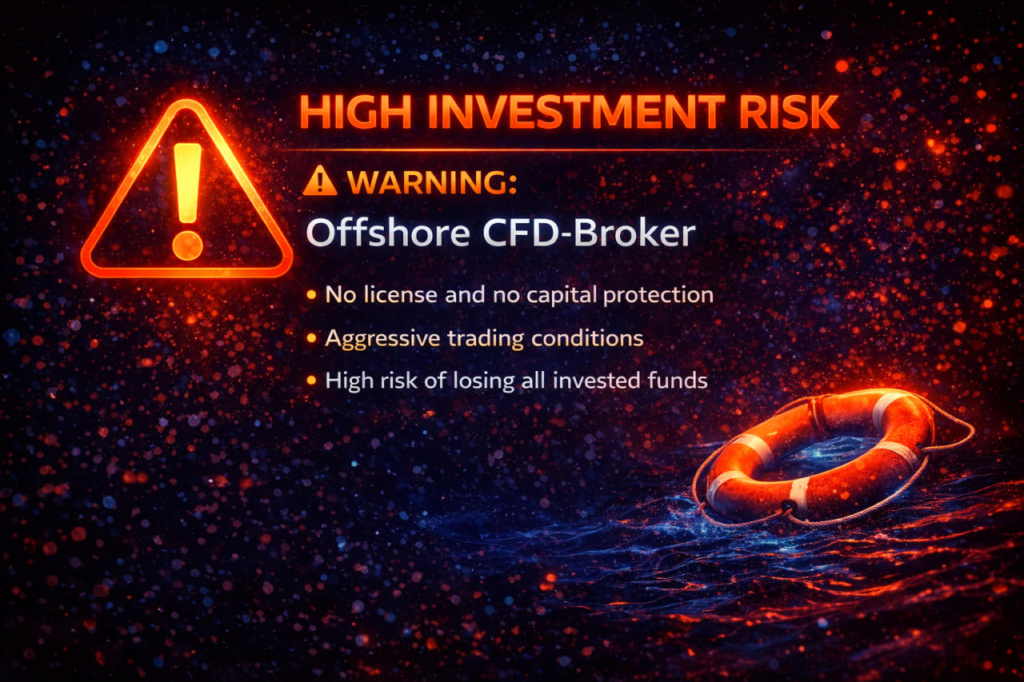
Trading conditions – risk built into the model
Tradeel does not publish a single transparent document with fixed and detailed trading conditions.
Key aspects of the trading model
CFD-based trading
Clients do not own underlying assets. The broker effectively acts as the counterparty to client trades.
Leverage and margin trading
Margin trading accelerates losses as quickly as gains and can wipe out deposits in a short time.
Spreads and commissions
Exact values are not fixed in advance. Final trading costs are determined internally by the platform.
Bonuses and withdrawal restrictions
Bonuses are linked to turnover requirements that may limit withdrawals.
Unilateral rule changes
The company reserves the right to modify trading conditions without prior notice.
Here, risk is not incidental. It is structurally embedded in the model.
Why Tradeel shows no signs of a long-term strategy
Several factors are difficult to ignore:
- one-year domain registration
- offshore licensing
- absence of major regulators
- lack of verified operational history
Such projects often operate for a limited period before:
- shutting down
- rebranding
- migrating to a new domain
Who faces the highest risk with Tradeel.com
Tradeel poses the greatest risk to:
- beginner traders
- individuals after trading courses
- users seeking passive income
- investors relying on the word “licensed” without deeper verification
Early user feedback on Tradeel.com
Tradeel is a new project, and the number of reviews is still limited.
Even at this early stage, users mention:
- difficulties contacting support
- concerns about unclear conditions
- problems when attempting withdrawals
A low volume of reviews combined with active promotion is an additional warning sign.
What this means for clients
For clients, this structure means there is no external authority overseeing withdrawals, no compensation mechanism in case of disputes, and no regulator capable of enforcing fair treatment.
In practice, all critical decisions remain entirely at the broker’s discretion.
Final conclusion

Tradeel.com is a newly launched offshore CFD broker registered in 2025 and operating outside the oversight of major financial regulators. The Mwali license does not protect client funds, while the trading model shifts most risks onto the client.
Tradeel illustrates how offshore brokers can appear legitimate on the surface while offering little real protection once serious problems arise.
Our experts recommend avoiding any financial interaction with this project.
Final takeaway
When a broker launches fast, takes deposits immediately, and relies on offshore licensing, risk comes first.
Lost money with a broker? Find out how to get it back! Contact us at [email protected] , leave your name and phone number so we can get back to you. The Watchdog Online team stands guard over your safety — together we will make the Internet better!